


One widely recognized method for stabilizing soil involves injecting a cement mixture into the subsurface area needing treatment. This technique uses a small-diameter pipe inserted into a borehole, allowing the controlled introduction of a water-cement blend.
This approach involves placing a rigid pipe equipped with non-return valves at specific intervals into a drilled borehole in the soil. The valves enable a staged injection of a cement mixture, which thoroughly stabilizes and consolidates the soil.
High-pressure cement injections are ideal for restoring the foundation soils of buildings, stabilizing excavation sites, enhancing geotechnical strand anchor, and improving the sealing of diaphragm wall joints, among other uses. These injections can function as temporary reinforcements in preparation for engineering projects or as lasting foundation solutions.
This method involves injecting cement into the soil beneath foundations that have experienced damage or settlement due to natural or human factors. In such cases, targeted cement injections restore and improve the characteristics of the foundation soil, consolidating it effectively over time.
Cement injections, combined with specific reinforcement elements, provide an effective solution for slope stabilization. Proper cement injection is essential for the effective installation of tiebacks and micropiles.
High-pressure cement injections often improve the soil's ability to block water. This approach can include building retaining walls with closely spaced, valved pipes arranged in staggered rows.

Valved injections are widely used in geotechnical applications to strengthen the bond between the anchor grout bulb and the surrounding soil.
Ideal soil types for high-pressure injection with geotechnical strand anchors
A specific application includes installing valved pipes (manquettes) during the assembly of strand anchors. Ca.Ti. can provide anchors with an integrated valved tube incorporating flexible tubing that allows for a seamless, joint-free design that can be coiled.
In the foundation section, the tube is equipped with manquettes valves at intervals defined by the project specifications.
These high-strength, elastic rubber valves are set at fixed intervals along a PVC tube.
The valves are meant to open under the pressure of injected cement grout and close as soon as the injection stops. They can be placed at any spacing specified by the client without limitations.
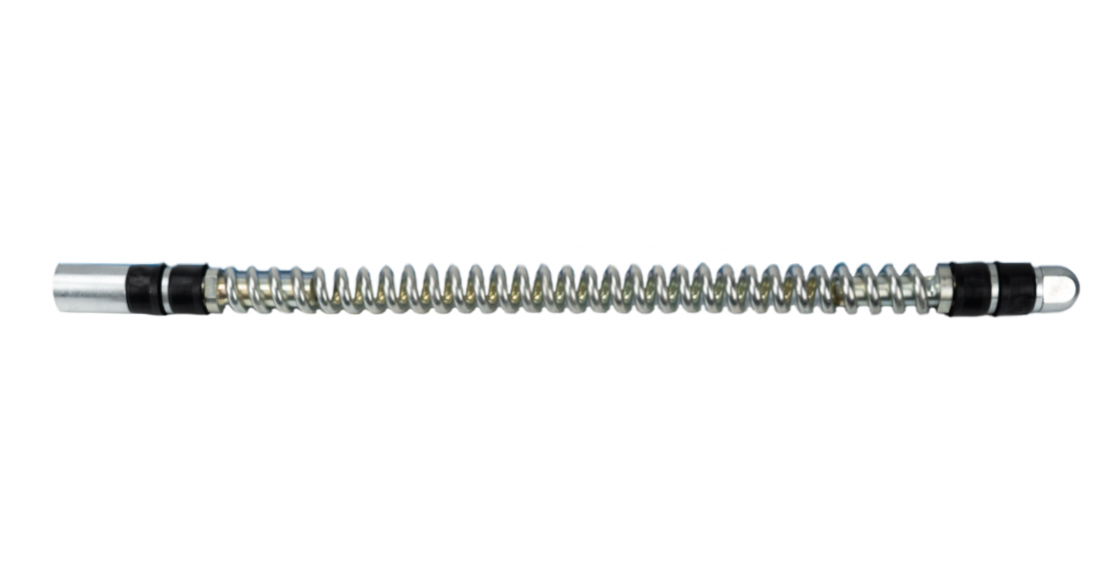
A packer is inserted into the PVC tube to facilitate this process.
The packer is positioned around each valve and isolates the sections before and after the valve, allowing the grout to flow out precisely through the valve.
Ca.Ti. Carnica Tiranti Srl offers a variety of packers for tubes of different sizes, including spring packers, rigid packers, and hydraulic packers.

The injection mixture typically consists of cement and water, with a water-cement (W/C) ratio ranging from 0.4 (for micropile injections) to 0.5 (for valved pipe injections) and up to 1 (for jet grouting injections).
The standard cement type is 325; however, for specific applications requiring high early strength (e.g., strand anchors), type 425 may be used.
The most common spacing between valves is 0.5 to 1 meter.
The packer is inserted into the PVC tube via a semi-rigid Geberit-type pipe, connecting to the injection system.
Monitoring the volume of mixture introduced into each valve (typically limited to 50 liters) is crucial to avoid over-injection.
Excessive amounts can lead to unwanted lamination effects, which are counterproductive and do not effectively increase the bulb’s volume locally.

The repeated and selective injections procedure involves inserting a packer into the PVC tube down to its base. The injection process then proceeds valve by valve, moving from the bottom to the top of the anchor's grout bulb section. After all valves have been injected, it is essential to thoroughly flush the PVC tube with water to ensure the option for future selective injections.
Subsequent injections, spaced about 12 hours apart, are essential for assessing the success of the initial injection phase through valve verification.
When high pressure (around 70 bar) is reached, and the localized treatment is promptly stopped, it indicates that the grout bulb has been effectively consolidated.
If the valve continues to absorb more mixture, it suggests that the area has high soil permeability and needs additional localized injections.
The process is considered complete—and the anchor’s foundation section has reached the required volume increase—when no more injections can be made through any valves in the foundation bulb.
Cement injections combined with the use of strand anchors improve the physical and mechanical properties of the soil.
These soil stabilization techniques allow for a more even load distribution, reducing concentrated stress in the soil and increasing its load-bearing capacity. By adding high-pressure cement injections, soil cohesion and strength are enhanced, improving the safety of the structures above. This approach is particularly useful in hilly and mountainous areas where slopes are more prone to landslides.
Ca.Ti. anchors feature a valved tube already applied to the anchor body and can be installed quickly, reducing construction times and minimizing disruption to nearby activities.
Additionally, stabilization with strand anchors can have a lower environmental impact, as it requires fewer site modifications.
Cement injections offer an effective solution for improving soil quality. This process can create physical barriers that isolate contaminants, reducing the risk of groundwater contamination and enhancing soil stability for future construction projects.
Ca.Ti. Carnica Tiranti Srl is advancing the research and development of new products and solutions. Comprehensive testing campaigns have been conducted on 27/34 valved tubes, simulating their use in the soil to assess their performance under stress and to evaluate new materials for packer seals, tubing, and cleaning systems.


